It’s been more than a month since hundreds of people attended a
meeting at the Allegria Hotel to voice their opposition to a proposed
liquefied natural gas terminal in the Atlantic Ocean, 17 nautical miles
southeast of Jones Beach. If built, a pipeline extending from the
station would hook up to an existing pipeline 2.2-miles south of
Atlantic Beach.
According to Larry Ragonese, press director for the New Jersey Department of Environmental Protection, New Jersey Gov. Chris Christie has not changed his position on LNG terminals ever since he vetoed a similar proposal in 2011. “What he said on the record at the time hasn’t changed”, Ragonese told the Herald. “We haven’t had a change of heart.”
Christie’s veto letter stated that the project “would present unacceptable and substantial risks to New Jersey’s residents, natural resources, economy and security.”
The latest proposed station, Port Ambrose, is also a liquefied natural gas terminal, a deepwater port that imports and exports natural gas. It would allow enormous LNG vessels — as long as the Empire State Building is tall — to directly connect to the region’s natural gas system.
The port would be located near the entrance to the New York Harbor, in two active Coast Guard training areas; in the middle of a proposed offshore wind farm area, and among several fishing zones and wildlife migration routes. The port south of Jones Beach, and east of Monmouth Beach in New Jersey, would connect to an offshore pipeline two miles off Atlantic Beach.
Liquefied natural gas is natural gas that has been super-chilled — it is clear, colorless and extremely volatile. This gas is compacted so that large volumes can be shipped overseas. LNG should not be confused with gasoline or compressed natural gas; each LNG tanker has the energy equivalent of 55 Hiroshima bombs. All LNG imports are from
foreign countries — over two-thirds of the world’s natural gas is in Russia and the
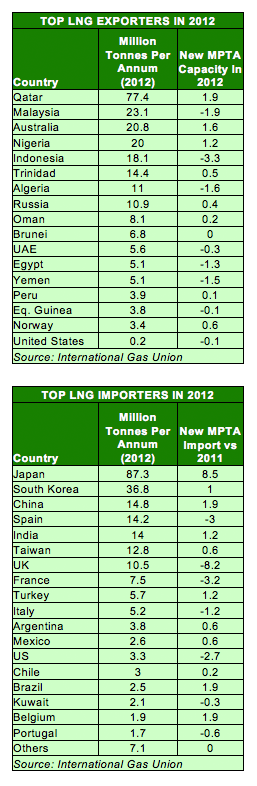
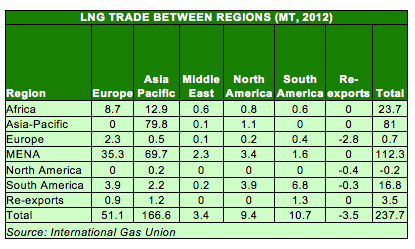
Middle East. Sources include Russia, Yemen, United Arab Emirates, Qatar, Algeria, Egypt, Nigeria and soon, Iran.
Port Ambrose is a direct threat to our domestic homeland security. This past week, U.S. Sen. Edward Markey called on President Obama to order the U.S. Coast Guard to review security procedures for shipments of liquefied natural gas from Yemen to terminals near Boston.
And from an environmental position, there is a real concern that if Port Ambrose exports liquefied natural gas, there will be more pressure from the energy industry to permit hydraulic fracturing, or “fracking,” in New York.
Among the other environmental impacts: empty LNG tankers will destroy vast quantities of marine life by having to refill billions of gallons of seawater to replace liquid cargos that suck in trillions of fish, eggs, larvae, and other life. Additionally, the project would dredge up over 20 miles of a sea floor where thousands of tons of garbage were dumped from New York City barges in the 1960s, ’70s and ’80s — thousands of tons of toxic sediment in the ocean that would, if released, directly affect the water quality off the Long Beach barrier island.
The port would be vulnerable to the destructive forces of hurricanes and nor’easters. Even with the latest technology, equipment and strict federal regulations, there would be inevitable gas spills due mechanical failure and human error. The City of Long Beach will not receive any financial benefit from the LNG terminal
connection of a gas line that runs through Long Beach. There will be few, if any, jobs created from this project. The project has completed its scoping sessions in Long Beach and Edison, N.J.
An environmental impact statement will be issued and there will be more time for
further public input. I urge the Long Beach City Council, Nassau County, state and federal elected representatives to follow Governor Christie’s lead and demand that Governor Cuomo veto the Port Ambrose LNG project.
Ellmer is a Long Beach resident and a former co-chair of the city’s advisory committee on the proposed LNG terminal.
According to Larry Ragonese, press director for the New Jersey Department of Environmental Protection, New Jersey Gov. Chris Christie has not changed his position on LNG terminals ever since he vetoed a similar proposal in 2011. “What he said on the record at the time hasn’t changed”, Ragonese told the Herald. “We haven’t had a change of heart.”
Christie’s veto letter stated that the project “would present unacceptable and substantial risks to New Jersey’s residents, natural resources, economy and security.”
The latest proposed station, Port Ambrose, is also a liquefied natural gas terminal, a deepwater port that imports and exports natural gas. It would allow enormous LNG vessels — as long as the Empire State Building is tall — to directly connect to the region’s natural gas system.
The port would be located near the entrance to the New York Harbor, in two active Coast Guard training areas; in the middle of a proposed offshore wind farm area, and among several fishing zones and wildlife migration routes. The port south of Jones Beach, and east of Monmouth Beach in New Jersey, would connect to an offshore pipeline two miles off Atlantic Beach.
Liquefied natural gas is natural gas that has been super-chilled — it is clear, colorless and extremely volatile. This gas is compacted so that large volumes can be shipped overseas. LNG should not be confused with gasoline or compressed natural gas; each LNG tanker has the energy equivalent of 55 Hiroshima bombs. All LNG imports are from
foreign countries — over two-thirds of the world’s natural gas is in Russia and the
Middle East. Sources include Russia, Yemen, United Arab Emirates, Qatar, Algeria, Egypt, Nigeria and soon, Iran.
Port Ambrose is a direct threat to our domestic homeland security. This past week, U.S. Sen. Edward Markey called on President Obama to order the U.S. Coast Guard to review security procedures for shipments of liquefied natural gas from Yemen to terminals near Boston.
And from an environmental position, there is a real concern that if Port Ambrose exports liquefied natural gas, there will be more pressure from the energy industry to permit hydraulic fracturing, or “fracking,” in New York.
Among the other environmental impacts: empty LNG tankers will destroy vast quantities of marine life by having to refill billions of gallons of seawater to replace liquid cargos that suck in trillions of fish, eggs, larvae, and other life. Additionally, the project would dredge up over 20 miles of a sea floor where thousands of tons of garbage were dumped from New York City barges in the 1960s, ’70s and ’80s — thousands of tons of toxic sediment in the ocean that would, if released, directly affect the water quality off the Long Beach barrier island.
The port would be vulnerable to the destructive forces of hurricanes and nor’easters. Even with the latest technology, equipment and strict federal regulations, there would be inevitable gas spills due mechanical failure and human error. The City of Long Beach will not receive any financial benefit from the LNG terminal
connection of a gas line that runs through Long Beach. There will be few, if any, jobs created from this project. The project has completed its scoping sessions in Long Beach and Edison, N.J.
An environmental impact statement will be issued and there will be more time for
further public input. I urge the Long Beach City Council, Nassau County, state and federal elected representatives to follow Governor Christie’s lead and demand that Governor Cuomo veto the Port Ambrose LNG project.
Ellmer is a Long Beach resident and a former co-chair of the city’s advisory committee on the proposed LNG terminal.
Post to be found at:
http://www.liherald.com/stories/LNG-port-raises-environmental-and-security-concerns,49510?content_source=&category_id=5&search_filter=&event_mode=&event_ts_from=&list_type=&order_by=&order_sort=&content_class=&sub_type=&town_id=